How to Manage Unmatched Tolls Without Losing Revenue
An unmatched toll isn't lost revenue — build a workflow that diagnoses it while the reimbursement deadline is still open.
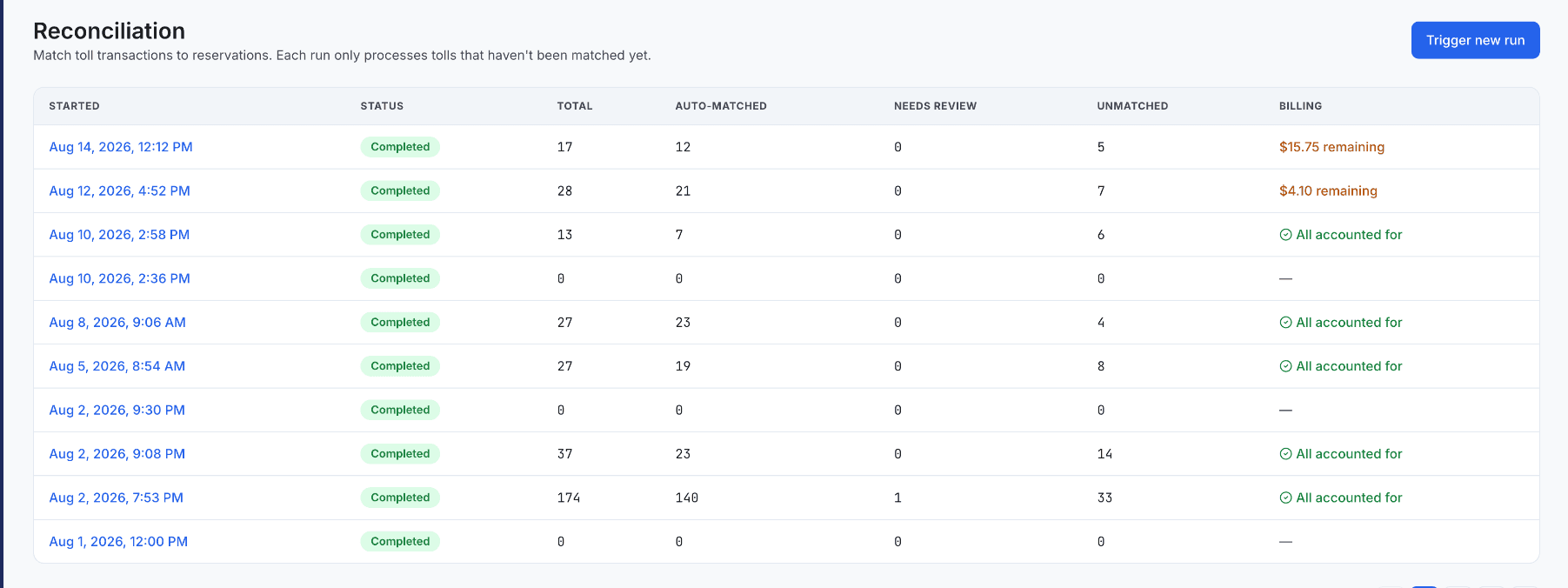
An unmatched toll is an exception that needs diagnosis, not automatically lost revenue and not something to force into whichever reservation happens to be closest in time. The reimbursement window keeps running while it sits unresolved, so the diagnosis matters on a deadline, not just eventually.
Classify the actual failure reason
Common causes: a missing or unrecognized plate, a transponder that was never assigned historically, reservation data that was never imported in the first place, a transaction outside every known trip window, overlapping or back-to-back trips, genuine host/delivery/maintenance/personal use, or a provider record that's simply missing the actual travel time. The fix — and whether it's fixable at all — depends entirely on which of these it actually is.
Use reconciliation history to see whether the pile is growing
Run-level totals make it possible to tell whether unmatched records are improving, holding steady, or accumulating over time — a single run's unmatched count means less than the trend across several runs. See How Kelviz Matches Toll Transactions to Turo Reservations for what's actually happening in the matching step producing these numbers.
Work the oldest eligible cases first, and resolve or explain every item
Sort unmatched charges by their related reservation's deadline where it's known — a small toll close to expiration is more urgent than a larger one from yesterday. Use explicit dispositions (matched, host use, duplicate, invalid, outside trip, insufficient evidence, expired) rather than letting unexplained records quietly disappear from reporting. If unmatched records keep coming from the same account, plate format, or missing reservation import, that's the actual upstream cause to fix.
Kenneth Elliott operates Elliottz Motors and has managed more than 1,000 Turo trips.