Manual vs. Automated Turo Toll Reconciliation
Compare manual and automated toll reconciliation across imports, matching, deadlines, evidence, and cost — and where a mix of both makes sense.
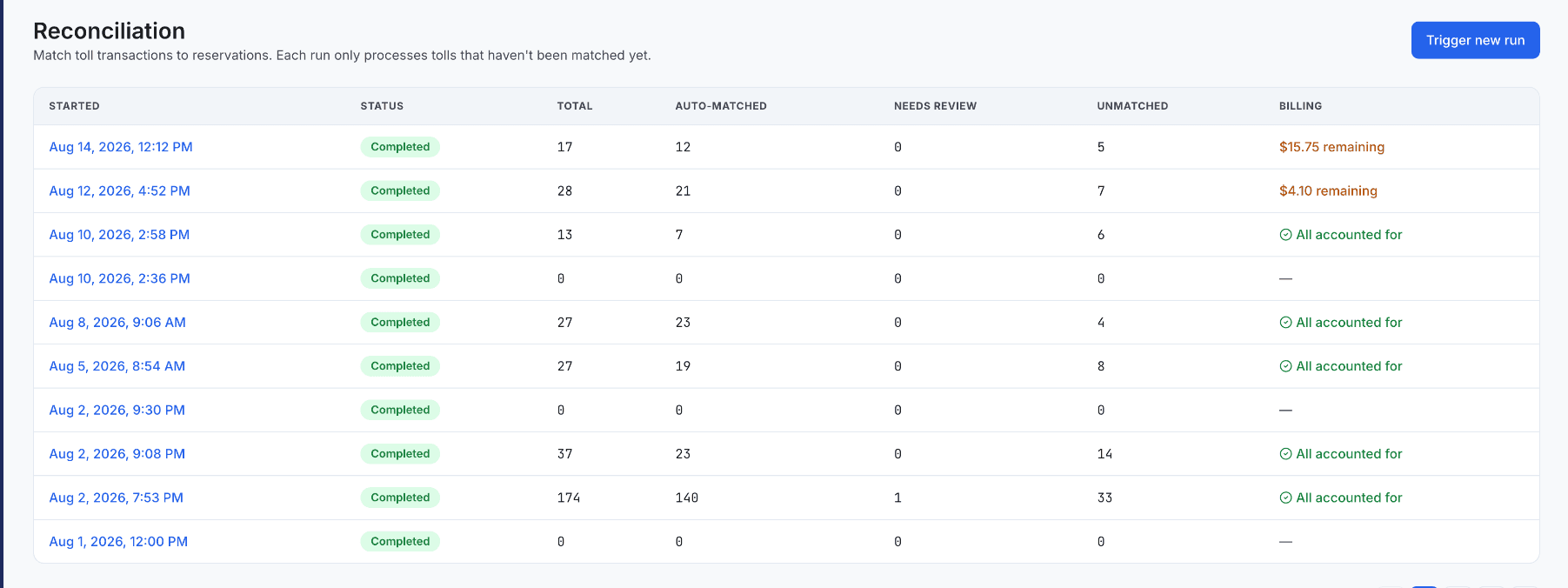
Manual toll reconciliation can work fine for a small, low-volume fleet. Automation earns its keep once transaction volume, provider count, back-to-back reservations, moved transponders, and team handoffs make consistent manual review hard to sustain. The real decision isn't "human or software" — a reliable automated workflow still needs a person for ambiguous matches, eligibility calls, evidence review, and final billing approval.
How manual reconciliation actually works
A host downloads provider activity, cleans up columns, compares plates or transponders against reservations by hand, copies matching charges into a tracker, prepares evidence, submits invoices, and records the outcome. It's low-cost and fully visible, but repetitive, method-inconsistent between reviewers, prone to duplicates, and only as reliable as whoever remembered to run it this week.
What automation actually changes
A matching engine can standardize provider fields, catch a re-imported file before it creates duplicate rows, normalize plates and transponders, compare travel time against reservation windows, score how confident it is in each candidate match, and route anything uncertain to a review queue instead of guessing. What it shouldn't do is silently invent missing data or force an uncertain charge onto a reservation just to clear the queue.
Compare total operating cost, not sticker price
Manual work isn't free — measure the staff time actually spent importing, cleaning, matching, reviewing, preparing evidence, submitting, correcting, and reporting. For software, count the subscription, implementation, training, and the review time that doesn't go away just because matching got automated.
When manual still makes sense, and when it doesn't
Manual reconciliation is reasonable with few vehicles, one provider, low toll volume, no team handoffs, and a disciplined review schedule. Warning signs it's time to test automation: repeated imports, a growing unmatched queue, missed deadlines, moved transponders, duplicate billing, inconsistent reviewers, or trouble explaining the monthly total. Kelviz automates the structured, repetitive parts of the pipeline while keeping a human in the loop for anything uncertain — confirm current capabilities during a trial rather than assuming from this article alone.
Kenneth Elliott operates Elliottz Motors and has managed more than 1,000 Turo trips.