Turo Fleet Toll Policy Template
An internal SOP outline covering source records, vehicle tracking, reconciliation, billing approval, and deadlines.
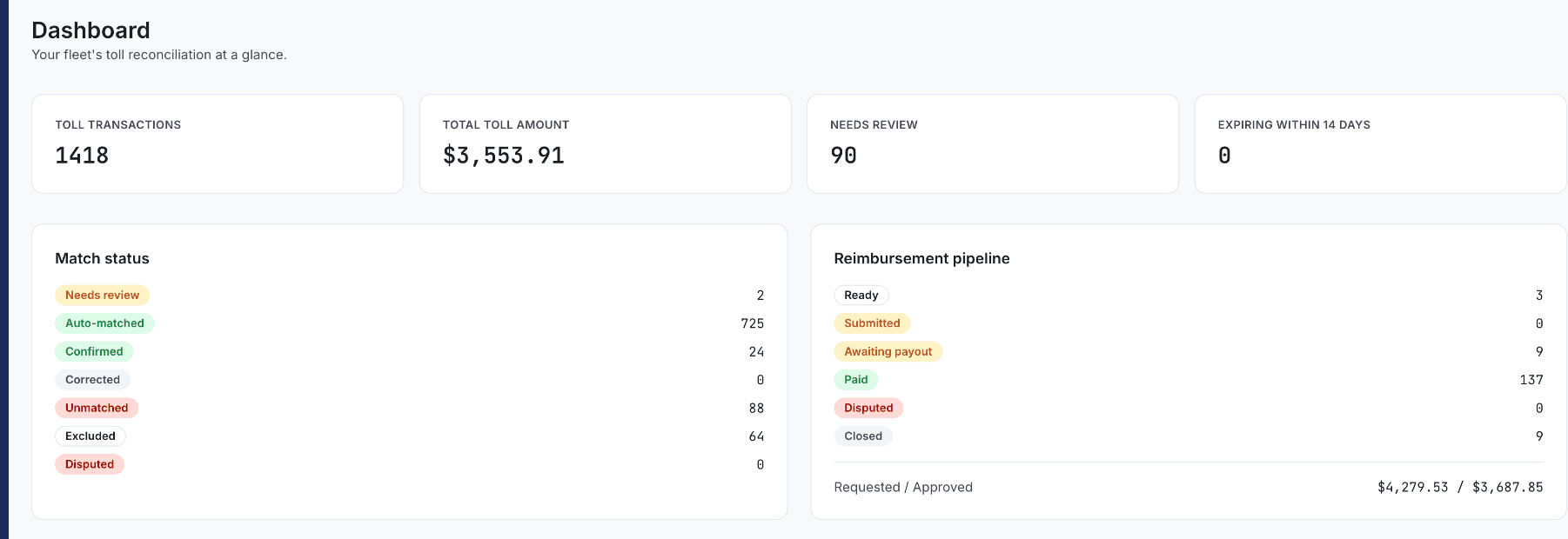
An internal toll policy makes the process consistent once several vehicles or team members are involved — it should define responsibilities without contradicting Turo's or the toll provider's own rules. This is a written policy document, distinct from How to Manage Toll Reconciliation With a Fleet Team, which covers the reasoning behind the roles this policy assigns.
Purpose, source records, and vehicle/transponder tracking
State plainly what the policy governs: "This policy governs how [Fleet name] records, reconciles, reviews, documents, submits, and reports tolls connected with hosted vehicle reservations." For source records: original toll-provider exports and notices must be retained securely, and every import must record provider, account, coverage period, file name, date, and outcome. For vehicles and transponders: plate and transponder assignments must include effective start and end dates, and devices may only be moved by authorized staff following the assignment-change procedure.
Reconciliation and billing approval
State the matching rule plainly: transactions are matched using vehicle identifiers and travel timestamps, and conflicting or incomplete matches require human review rather than an automatic guess. For billing: only eligible, documented charges may proceed, and duplicate, host-use, operational, unsupported-fee, and insufficient-evidence records must be excluded with a stated reason — not silently dropped.
Deadlines, outcomes, and ownership
Open cases get reviewed by deadline, and submitted, paid, disputed, denied, expired, and written-off outcomes all remain auditable rather than getting overwritten. Name the actual roles: importer, reviewer, approver, billing owner, administrator, and manager, with a defined backup for each when someone's out. Kelviz is built around exactly this same role structure — see the workflow section for how it maps onto the product.
Kenneth Elliott operates Elliottz Motors and has managed more than 1,000 Turo trips.