How to Build a Weekly Turo Toll Cleanup Routine
A short, repeatable weekly routine keeps small toll exceptions from becoming deadline emergencies — seven steps, start to finish.
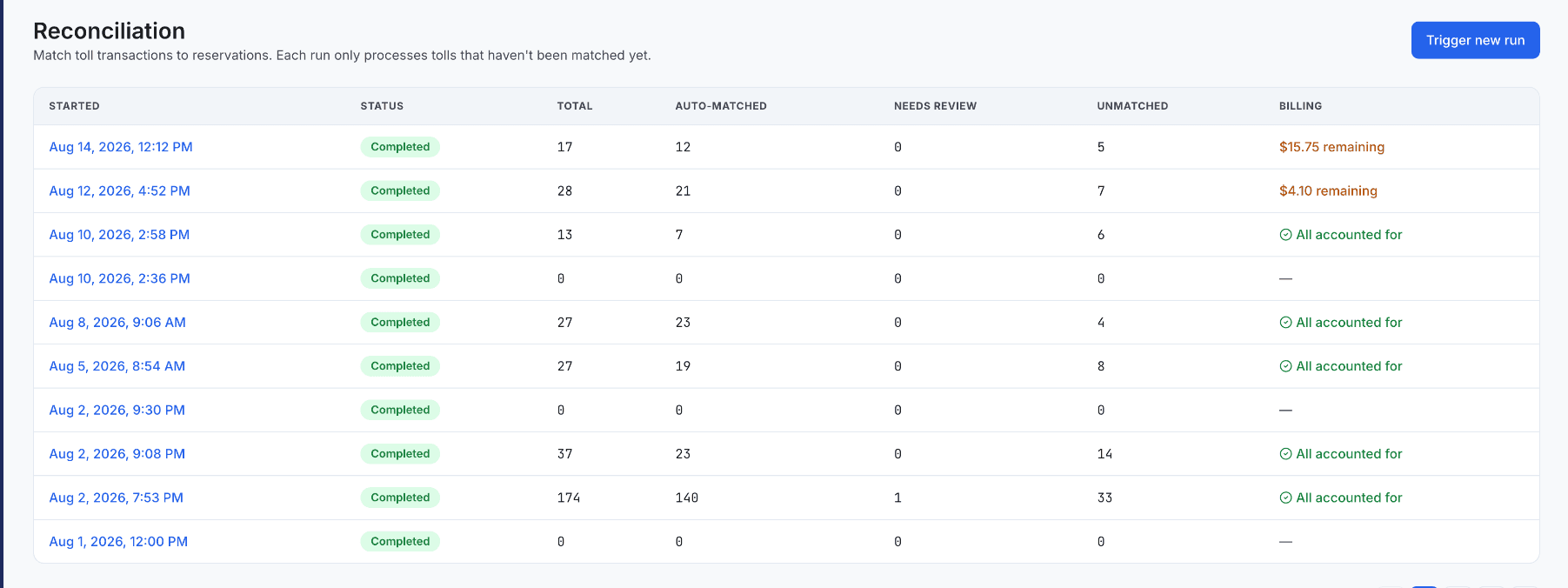
A weekly toll routine prevents small exceptions from quietly turning into deadline emergencies. The right cadence is short enough to catch problems early, but still leaves room for late-posting provider activity and genuinely difficult matches to resolve on their own timeline.
Steps 1-3: coverage, imports, reconciliation
Confirm source coverage first — list every toll and reservation source, its latest imported date, and any files you're missing. Then review imports for new, duplicate, rejected, failed, and incomplete results (see How to Handle an Incomplete Toll or Reservation Import). Then run reconciliation and review automatic matches, needs-review items, unmatched records, and remaining billing value.
Steps 4-6: data quality, deadlines, outcomes
Clear data-quality blockers — missing vehicles, overlapping reservations, incomplete files, reimbursement mismatches (see How a Turo Fleet Can Use a Data-Quality Review Queue) — before they compound into bigger problems. Work deadlines by prioritizing eligible unbilled charges and tickets by days remaining or due date. Then update outcomes: record what got submitted, what's awaiting payment, what got paid, disputed, ineligible, or closed.
Step 7: record what's still open, and track recurring causes
Assign an owner and a next action to every unresolved item rather than leaving it in a queue with no one responsible for it. Track which categories of issue keep recurring — the same account, the same file format, the same missed step — since a repeated cause is a process fix waiting to happen, not just another item to clear this week.
Kenneth Elliott operates Elliottz Motors and has managed more than 1,000 Turo trips.