How a Turo Fleet Can Use a Data-Quality Review Queue
A completed import doesn't mean the data is correct — see how a categorized queue turns inconsistencies into resolvable work.
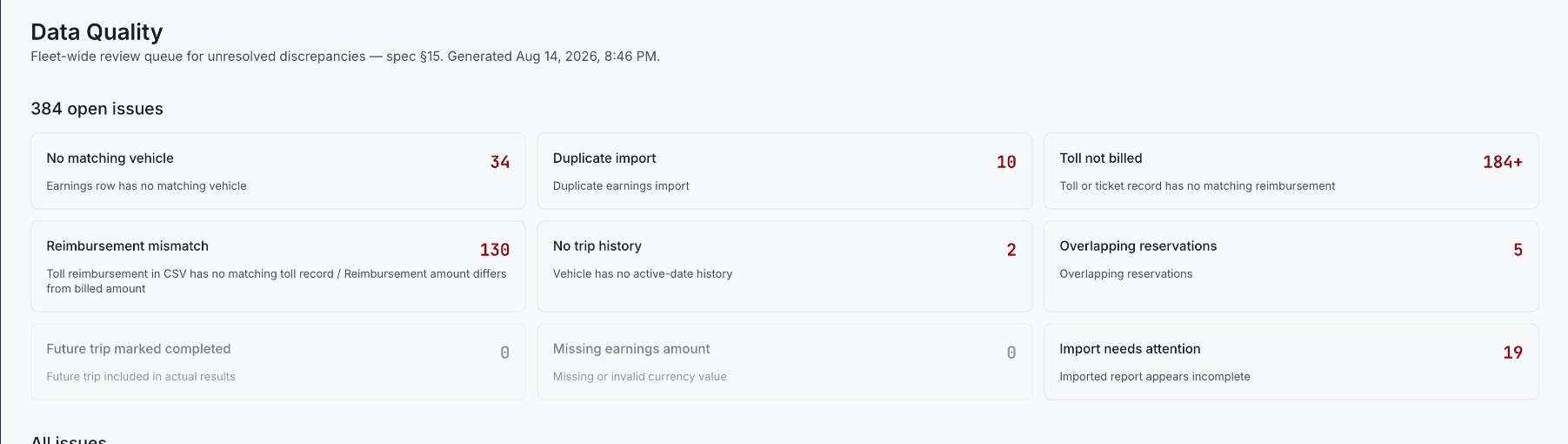
Automation is only as reliable as the data feeding it. A fleet can import every statement on schedule and still produce wrong results if vehicle identifiers, reservations, amounts, or source files are incomplete — a data-quality queue turns those hidden inconsistencies into work that can actually be assigned and closed out, instead of quietly skewing whatever depends on them.
What's worth detecting
Kelviz's Data Quality screen groups issues into categories: no matching vehicle, duplicate import, toll or ticket not billed, reimbursement mismatch, missing trip history, overlapping reservations, missing or invalid currency values, and imports needing attention. A visually successful import — every row processed, no errors thrown — can still contain issues in any of these categories that affect matching, billing, or reporting downstream. Each category has its own dedicated fix-it guide: "No Matching Vehicle", reimbursement mismatches, overlapping reservations, and missing trip history.
Prioritize by actual impact, not just by count
Not every issue carries equal urgency. A missing vehicle can exclude an entire reservation from calculations. An overlapping reservation can make toll attribution genuinely ambiguous. An unbilled record close to its deadline is immediate recovery risk in a way a data-formatting issue usually isn't — use severity, financial impact, deadline proximity, and downstream effect to decide what the team works first.
Close the loop, and fix the upstream cause
Every issue should end with a cause, an owner, a correction, and a verified resolution — not just a status flip. When the same category keeps recurring from the same account or file format, that's a signal to fix the source process (a provider template, an import habit) rather than keep manually clearing the same kind of exception every cycle.
Kenneth Elliott operates Elliottz Motors and has managed more than 1,000 Turo trips.